Lighten your hair naturally: the complete guide to going blonde again without damaging it
Contents
You want to lighten your hair naturally, without a salon appointment or harsh products? You're definitely not alone, Blondie: it's one of the most asked questions from brunettes and blondes looking to get back their childhood blonde. The tricky part is that the word "natural" covers very different realities. Some tricks genuinely lighten a little. Others just dry out your hair with barely any result. We're breaking it all down, honestly.
Yes, you can lighten your hair naturally, without bleach at a salon. Some at-home methods (lemon, chamomile, honey) have a real but limited effect, and can sometimes be damaging. A 95% natural Lightening spray used regularly can lift 2 to 4 shades over several weeks, without stressing the hair fiber.
Is it really possible to lighten hair naturally?
Yes, but with some important nuances. "Naturally" doesn't mean "instantly" or "without any effect on the fiber." Even the sun lightens hair through a natural reaction that breaks down some pigment. The real question isn't "is it chemical or not," it's "does it damage my hair fiber or not."
An effective natural lightening method needs to tick three boxes: a visible, measurable effect, a routine you can realistically stick to, and above all, no aggression to the hair fiber (the part of the hair made of keratin that gives it its strength and shine). That last point is where most at-home tricks, lemon first and foremost, fall short.
What are the at-home methods to lighten hair?
Here are the four most searched methods, with what they actually do to your hair fiber, no hype, no wishful recipes.
Lemon, the fake good idea
Lemon lightens a little in the sun: citric acid opens the cuticle (the outer layer of the hair) and the UV reaction slightly bleaches the pigments. On paper, it works. Except that lemon dries out and damages the hair fiber deeply. It dehydrates the hair, makes it porous and brittle, and the result is often uneven, even brassy on the lengths. It's the most cited method online, and it's precisely the one we most firmly advise against: the benefit-to-risk ratio is poor.
Chamomile, a limited brightening boost
Chamomile very slightly lightens already-light hair and revives golden tones. The effect is real, but weak, slow, and barely works on dark hair. Think of chamomile as a one-off brightening boost, not a transformation of your base color.
Honey, gentle but very slow
Mixed with water or conditioner, honey releases a little natural hydrogen peroxide. The lightening is very subtle and very gradual, it takes long, repeated applications, and results vary from one head of hair to another. Its real strength: a genuinely nourishing effect on the fiber.
Baking soda and other tricks to avoid
Baking soda and at-home hydrogen peroxide keep popping up in tip lists. Be honest with yourself: these methods damage the fiber without guaranteeing even lightening. We never recommend them.

| Method | Real effect | Timeframe | Risk to the fiber | Regularity required |
|---|---|---|---|---|
| Lemon | Slight, uneven | Several sun exposures | High, dries out and breaks hair | Daily (not recommended) |
| Chamomile | Very slight, light hair only | Several weeks | Low | Regular |
| Honey | Very subtle | Several weeks | Low, nourishing | Long, frequent applications |
| OMAD'S Lightening spray | 2 to 4 shades | A few weeks | None, 95% natural formula | 2 to 3 times/week then maintenance |
Our routine for lightening naturally without damaging the fiber
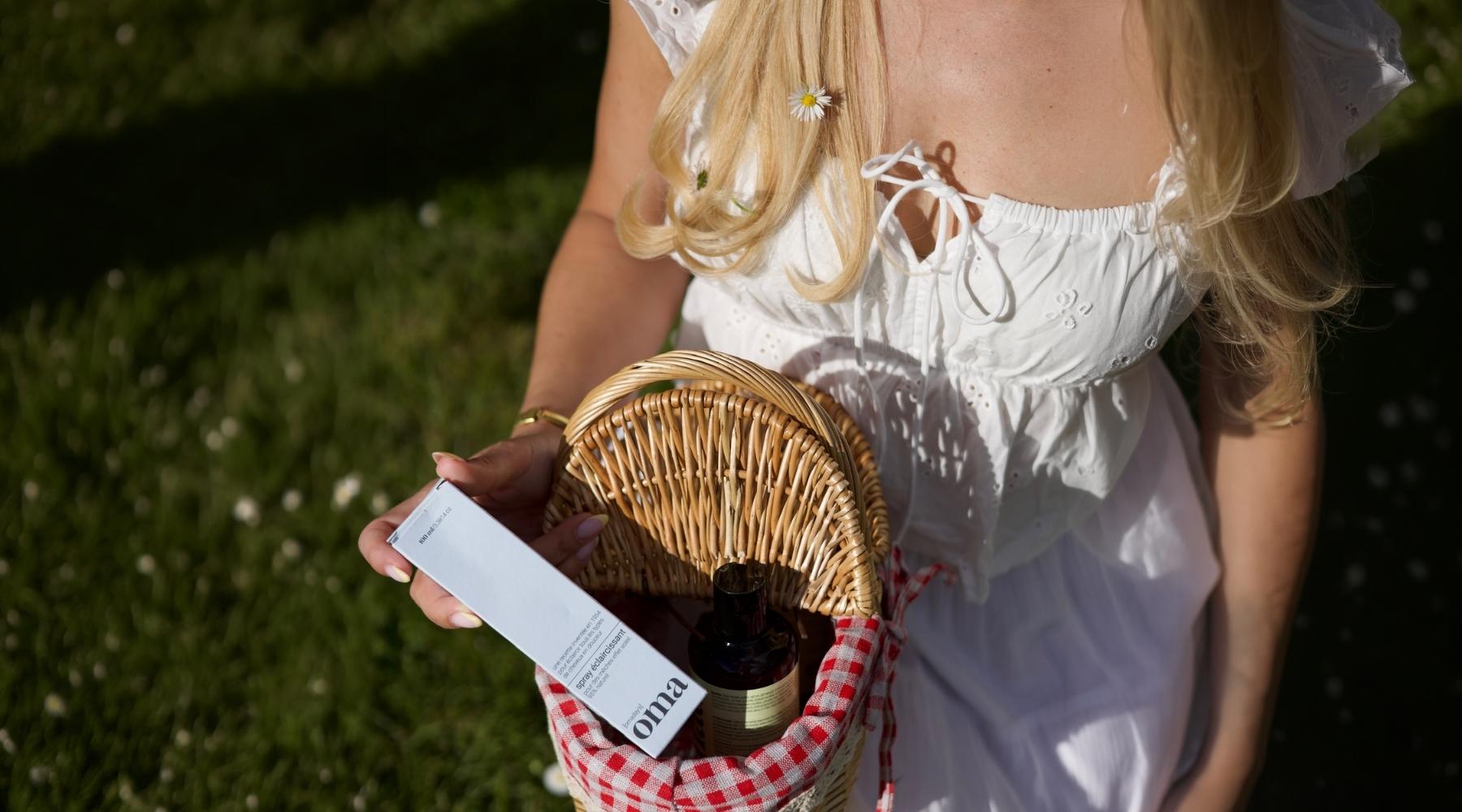
This is where we tell you about what, at OMAD'S, really delivers on the promise of "natural and effective without aggression." The Lightening spray is a formula that's 95% natural origin, rated 100/100 on Yuka, ammonia-free, made in our family lab in Belgium. Important to understand: the spray adds no blonde pigment. It progressively lightens the existing base (brunette, dark brunette, dark blonde), which is what brings the blonde underneath to the surface. It's not a dye.
First results are visible from the first application, and build with regularity. The routine is simple: spray onto clean, slightly damp hair, activate with heat (sun, hair dryer or open air), and repeat every 2 to 3 days at first, then once a week for maintenance.

Once your base is lightened, you can refine the shade with a repigmenting shampoo: they don't do the same job. The Blond Vanille shampoo deposits light golden tones, the Blond Miel shampoo warms toward caramel tones. These shampoos don't lighten, they deposit a precise tint onto a base already lightened by the spray. For nourishment between applications, the Night serum nourishes lengths and ends once or twice a week.

And what could it do for your hair?
Answer a few questions and find out what result you can realistically aim for on your color.
Take my free hair quizOn the social proof side, the Lightening spray has an average rating of 4.5/5 across 1,702 verified customer reviews, out of a total of 2,573 reviews across all ranges. Not sure what result to expect for your specific base? The free hair diagnostic gives you a personalized answer in just a few questions. And if you want to understand where the formula comes from, head to our story: a family recipe dating back to 1954, passed down through three generations.
What mistakes to avoid when you want to lighten your hair naturally?
The first mistake is thinking that an aggressive at-home method like lemon is "more natural" because it comes from your fridge. Natural isn't defined by where the ingredient comes from, but by what it does to your fiber. Second common mistake: expecting results in a single application. Gradual lightening works through regularity, not through one single session, however long. Third mistake: applying an acidic method (lemon) and then spending a long time in the sun without protection, which combines dehydration and UV damage. Finally, on very fragile hair (recent bleach or perm), it's better to go gently, one application then observe, and reach out to contact@omadays.com if in doubt.
FAQ
Does lemon really lighten hair?
Yes, a little, thanks to citric acid combined with UV rays from the sun. But lemon dries out and damages the fiber, making it porous and brittle, with a result that's often uneven and brassy. It's not a method we recommend, the balance between the effect you get and the risk to your hair is poor.
Does chamomile lighten dark hair?
No, or barely. Chamomile mainly works on already-light hair, reviving golden tones. On a brunette or dark base, the effect is almost invisible. It's a one-off brightening boost, not a transformation of your base color.
How long does it take to lighten hair naturally?
With a 95% natural Lightening spray used 2 to 3 times a week, first results are visible from the first application, and lightening of 2 to 4 shades builds over several weeks through regularity. At-home methods like chamomile or honey usually take longer for a much weaker effect.
Can you lighten your hair without damaging it?
Yes. It's possible with a formula that doesn't dry out the fiber, unlike lemon or baking soda. The OMAD'S Lightening spray, 95% natural origin and ammonia-free, is designed for progressive lightening that respects the fiber, including on color-treated or sensitized hair.
What is the best natural product to go blonde again?
A 95% natural Lightening spray, used regularly, is the most reliable solution to go blonde again without bleach at a salon. It lightens the existing base (it adds no pigment) and delivers visible results from the first application, unlike at-home tricks that are slower and less predictable.
Does the Lightening spray work on grey or white hair?
The spray suits grey or white blondes with yellow/brassy tones and can help tone those down. But if your only goal is to neutralize a yellow tone without lightening further, the anti-yellow tone Purple shampoo from the range is the most suitable product for that specific case.
How often should you use a natural lightening method?
For the spray, 2 to 3 times a week at first, then once a week for maintenance. For chamomile or honey, you'll generally need several applications a week over several weeks to hope for an effect, and a very modest one at that.
In summary
Lightening your hair naturally is possible, but not all methods are equal. Lemon damages more than it lightens, chamomile and honey stay limited to already-light hair or a very subtle effect. The solution that truly delivers on the promise of natural, effective and fiber-friendly is progressive, regular lightening. Want to know what result to expect on your specific base? Take the free hair diagnostic and discover the full OMAD'S range.

OMAD'S Lightening spray: lifts 2 to 4 shades progressively, 95% natural origin, rated 100/100 on Yuka
Discover it