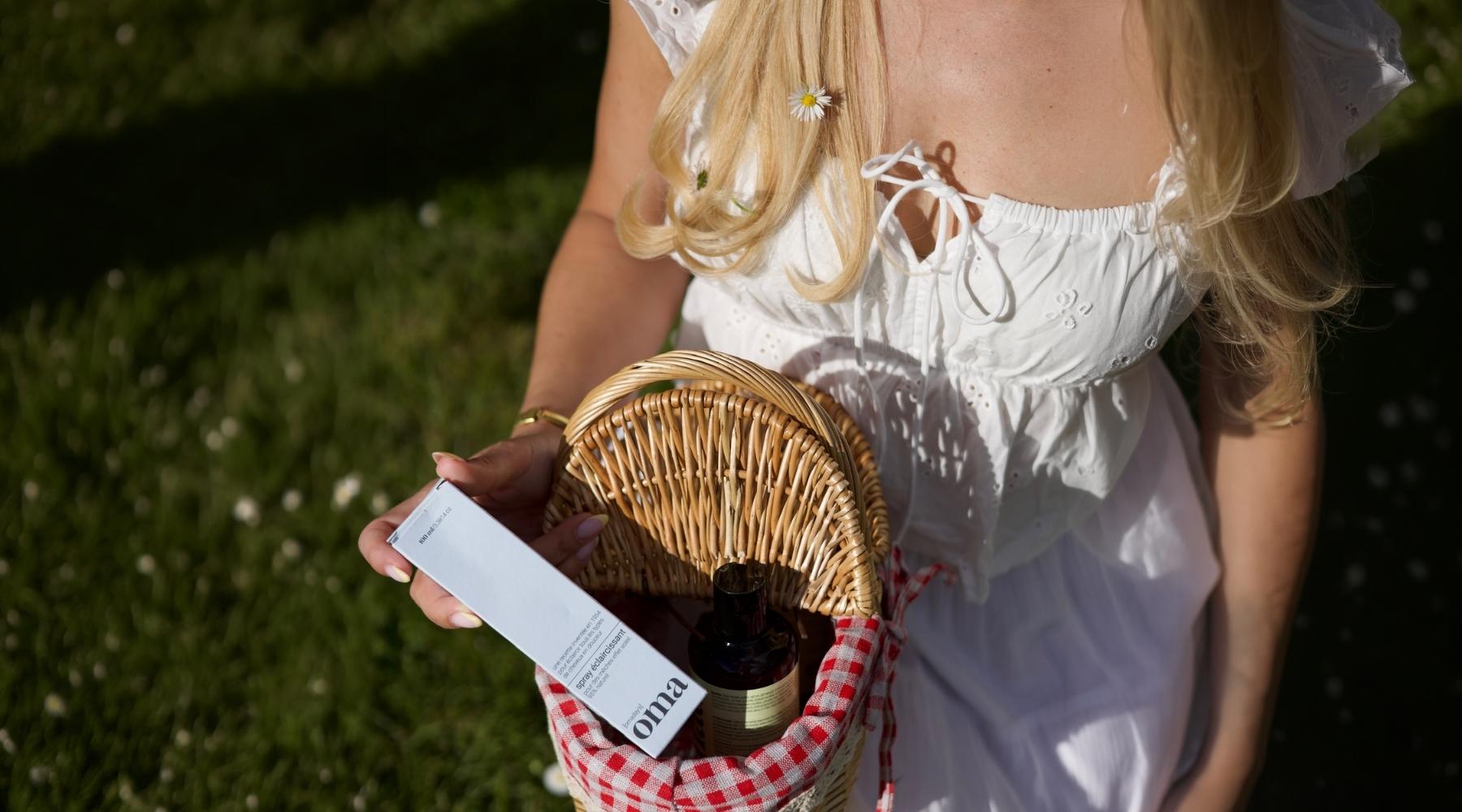
Chamomile to lighten hair: does it really work?
Contents
Yes, chamomile lightens hair a little, but only on already light bases and in a very subtle way. It's a brightness boost that revives golden tones, not a transformation. For a visible and consistent result, even on brown hair, you need a more targeted and reliable method.
What does chamomile actually do to your hair?
Chamomile contains flavonoids, including apigenin, which are golden-yellow plant pigments. These give the infusion its colour and, when applied to hair, deposit a golden tone on the surface. It's a tonal deposit, not an action on the hair's melanin like bleach would be.
In practical terms, chamomile doesn't alter the internal structure of the hair. It works on the surface, on the cuticle, adding a warm tint that gives the impression of brighter blonde. That's why the effect is real but superficial and temporary: it fades with each wash.
Which hair types does chamomile actually lighten?
Chamomile only works on already light hair: blonde, dark blonde, very light brown. On these bases, it revives golden tones and gives a slightly brighter and more even result.
On brown, dark brown or brunette hair, chamomile has no visible effect. There isn't enough natural pigment deposited to counteract the dark melanin in the hair. If your base is dark and you want a real result, chamomile won't take you from brown to blonde, no matter how often you apply it.
How to use chamomile on your hair?
The infusion rinse
The classic method involves preparing a concentrated chamomile flower infusion, letting it cool, then using it as a final rinse after shampooing, without rinsing again. It's a straightforward and gentle method, with no particular risk to the hair fibre since there's no drying agent like in lemon.
Frequency and duration
For a noticeable effect, you need to repeat the rinse several times a week, over several weeks. Sun exposure after application slightly enhances the result, as with many natural lightening ingredients. But even with consistency, the before/after difference remains subtle.

What are the real limits of chamomile?
Let's be honest: chamomile has clear limits, and it's better to know them before spending weeks on rinses for a result that won't come.
- Weak effect: a brightness boost on the tones, not a colour change.
- Limited to light bases: no effect on brown, dark brown or brunette hair.
- Slow results: several weeks of regular application to notice anything at all.
- Not cumulative over time: the effect washes out with the next shampoo, you have to start again constantly.
Beyond that, other DIY methods come with their own issues. Lemon dries out and damages the hair fibre: its acid opens the cuticle and deeply dehydrates the hair, often leaving a patchy, yellowish result. Honey releases a little natural peroxide but the effect remains very subtle and unpredictable. None of these methods deliver on the promise of a consistent, visible lightening result.
| Method | Real effect | Hair types | Risk to the hair fibre | Time to visible result |
|---|---|---|---|---|
| Chamomile | Subtle golden tone | Blonde and very light brown only | Low, no drying effect | Several weeks, subtle result |
| Lemon | Uneven lightening in the sun | All bases, but yellowish result | High, dries out and damages the fibre | Variable, unpredictable result |
| Honey | Very subtle lightening | All bases, minimal effect | Low, nourishing effect | Several weeks, random result |
| OMAD'S Lightening spray | Progressive lightening of the base | All blondes, light browns | None, 95% natural-origin formula | First results from the 1st application |
What to choose for a more visible and consistent result?
If you like chamomile for its gentle, natural side but want a result that's actually noticeable, there's an option that keeps that same logic while being more effective: the OMAD'S Lightening spray. Its formula is 95% natural-origin, with a 100/100 score on Yuka, and it's ammonia-free.
Like chamomile, this spray adds no blonde pigment: it lightens the existing base of the hair, whether brown, dark brown or dark blonde, it doesn't dye. The difference is in the intensity and consistency of the result: 2 to 4 shades in a few weeks, with first results visible from the very first application. The spray is made in our family lab in Belgium.

What would it look like on your hair?
Answer a few questions and find out what result you can aim for on your colour.
I'm taking my free diagnosisHow to use it is straightforward: spray onto clean, slightly damp hair, activate with heat (sun, hairdryer, or open air), then repeat every 2 to 3 days at first, once a week for maintenance. The spray is suitable for natural, coloured, highlighted and balayage blondes, baby blondes, and light brown hair for a more subtle effect.

Once the base is lightened, if you want to add a precise shade, light golden or warm golden, repigmenting shampoos take over: the Blond Vanille shampoo deposits light golden tones, the Blond Miel shampoo warm golden tones. The spray lightens the base, the shampoos deposit the tint on an already lightened base: these are two complementary steps, not interchangeable ones.
2,573 approved customer reviews across all ranges, and the spray has an average rating of 4.5/5 across 1,702 customer reviews. That's concrete proof that consistency pays off, unlike DIY methods where results remain uncertain.
To find out exactly what result to expect on your specific base, you can take the free hair diagnosis.
What mistakes to avoid with chamomile?
The first mistake is expecting a result on dark hair: it won't happen, no matter how patient you are. The second is giving up too soon or, on the flip side, persisting for months for half a shade of difference. The third mistake, more broadly, is thinking all DIY methods are equal: unlike chamomile, which stays gentle, lemon genuinely damages the hair fibre, so never confuse it with a risk-free alternative.
FAQ
Does chamomile really lighten hair?
Yes, but very slightly. Chamomile revives golden tones on already light hair thanks to its flavonoids, but it doesn't change the overall shade on brown or dark bases. It's a brightness boost, not a transformation.
How long does it take to see an effect with chamomile?
You need to count on several weeks of regular application, rinsing after each shampoo, to notice a difference, and it remains subtle. Sun exposure after application can slightly enhance the result.
Does chamomile work on brown or dark hair?
No. Chamomile doesn't have enough pigment to counteract the melanin in a brown or dark base. It only works on the surface of already light hair, reviving existing golden tones.
Does chamomile damage hair like lemon does?
No. Unlike lemon, which dries out and weakens the hair fibre due to its acidity, chamomile has no known drying effect. The problem with chamomile isn't the risk, it's the weakness and slowness of its effect.
What's the alternative for more visible lightening than chamomile?
The OMAD'S Lightening spray delivers a progressive lightening of 2 to 4 shades, with a 95% natural-origin formula. It lightens the existing base without adding any pigment, with first results from the very first application.
Can you combine chamomile and the lightening spray?
There's no need: the spray already covers what chamomile does (reviving golden tones) while going further on base lightening. It's better to focus on a consistent routine with the spray rather than stacking methods.
Does chamomile have other benefits for hair?
Yes, it's known to be soothing for the scalp and adds shine to light lengths. But when it comes to lightening, its role remains limited to maintaining existing golden tones.
In summary
Chamomile is a gentle, low-risk method, but its effect stays real and limited: a little extra golden shimmer on already light hair, nothing more. If you're starting from a brown base or want a result that's actually visible, it's better to rely on a routine built for that. The OMAD'S Lightening spray delivers on that promise, progressively and without damaging the hair fibre. To go further on natural methods, also check out our complete guide to lightening hair naturally.